


An electric car is simple and reliable. But it also needs attention.
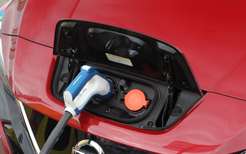
An electric car drives a trouble-free electric motor. There is usually no gearbox. Traction battery and control electronics? But cars with internal combustion engines are still more difficult and problematic to repair! And an electric car is simple and reliable. Almost everyone thinks so. But it turns out that electric vehicles also require attention and even repair.
Flow…
Tesla electric cars on our roads are no longer a rarity. Models 3, X and Y are still relatively fresh and no global difficulties have been noted with them yet. But the Model S appeared almost ten years ago, and there are already copies with solid mileage.
Problems with dead batteries and electric motors are not related to normal wear and tear. Moreover, there are Teslas with runs of 250-300 thousand kilometers, in which battery degradation is no more than 25-30%.
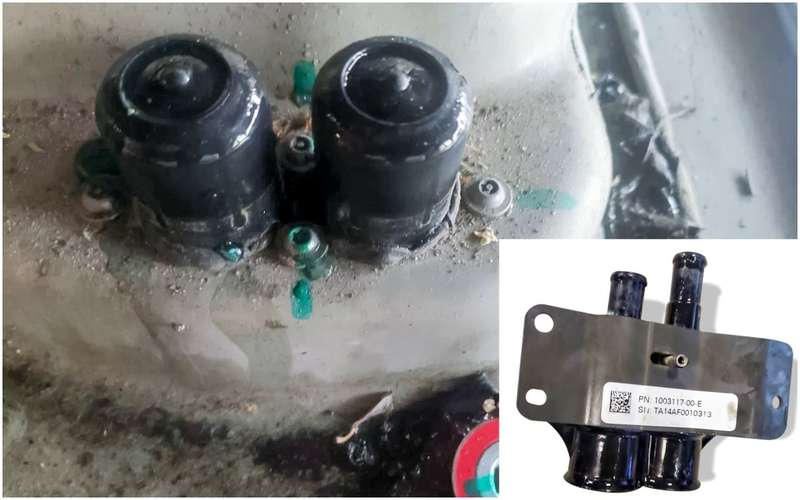 Tesla’s weak point was the cooling system. The bypass valve loses its tightness over time, the liquid enters the battery – and the electric car burns like a match.
All troubles – from the temperature maintenance system. In our conditions, temperature fluctuations and wet reagent winters do not withstand bypass valves. Over time, the rubber of the seals loses elasticity, cracks – and the coolant enters the storage cells of the traction battery, and sometimes into the electric motor. As a result, a short circuit can be expected in the motor wiring or in the cells.
We have already learned how to modernize the design using other materials. The procedure will cost about 75-80 thousand rubles. Very expensive, but this is due to the fact that the repair will have to remove the battery. It’s worth it, because in the worst case scenario, the car will burn to the ground.
 The phrase “battery explosion” is not a metaphor at all – this is what a normal cell from BMW and a “torn” one look like.
Another problem that Tesla owners face is called “Malevich’s square”. This is a tightly extinguished central display on the front panel.
Restoration will cost about 40 thousand rubles. The difficulty is that all Teslas are tracked online and with each software update it becomes more and more difficult for hackers to bypass security systems for diagnostics and repairs. But so far there are no impenetrable barriers.
“Depend”…
Mercedes of the “electric” EQ series have impenetrable barriers. Near one technical center that repairs electric vehicles, I immediately found several fresh, but completely dead EQCs.
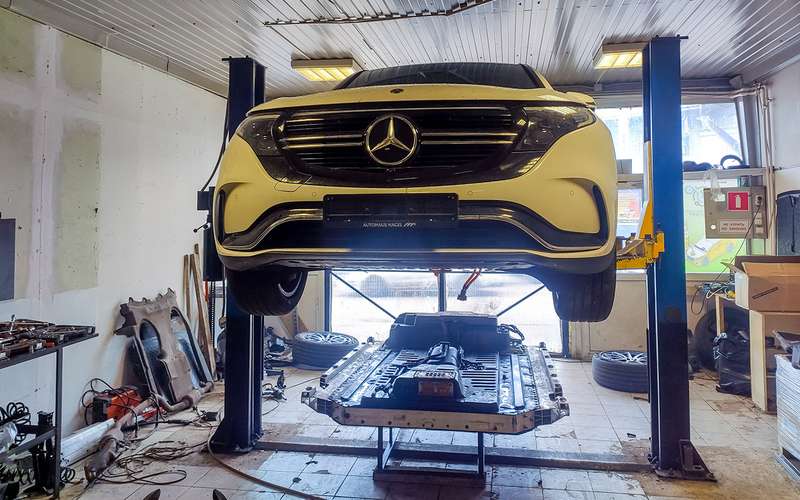 Mercedes-Benz EQC (like other electric trains of the EQ series) can become a beautiful flower bed for eight million rubles. To repair, you need authorization with a username and password. It is impossible to get it after the company leaves our market. Hack – too. The only way out is to put the car on a tow truck and take it abroad.
Removing and diagnosing electric motors and batteries does not solve the problem, because they are in perfect order. It is impossible to find out the reasons why the electronics simply “dropped” the car. To connect and read errors, there are few programs available – you need a login and password. Which, among other things, are tied to the location of the electric vehicle. When diagnosing, he must be in the technical center to which the service account is linked. So sharing it, even if there are connections with foreign dealers, will not work.
Our “experts” have tried everything, but no hacking and using a VPN helps – although there are no such difficulties with other brands. In fact, the current Mercedes-Benz electric vehicles can become expensive real estate for any trifling matter.
Perhaps one day our hackers will be able to defeat the Mercedes, but for now the only way out is to put your EQS or EQC on a tow truck and take it to … let’s say, to Finland. In this case, it is possible to repair – for big money.
 Electric motors on Teslas do not burn as often as a battery “leaks”. But for some reason, similar engines on Mercedes B-class burn regularly.
 The result of coolant getting inside the battery. Corrosion has already begun, but it has not reached a fatal short circuit.
They are burning…
However, not all electric Mercedes are so impregnable – there is also a second-generation B‑class. Its electric motor develops only 180 hp. with., and the battery is barely enough for 150 kilometers. Such “besheks” do not have an impenetrable firewall in electronics, and cars made in 2014-2015 cost on average about one and a half million.
But the B‑class also has a flaw – the electric motor is on fire! It happens on a run of 70-75 thousand kilometers, like clockwork. The electric motor is similar to the one on the Tesla.
One can only wonder why it burns on a lighter Mercedes with a shorter range. Replacing the electric motor will cost 200-220 thousand rubles. Moreover, there is no point in repairing the electric motor – re-winding the anchor and stator will not be any cheaper. And there is still no guarantee of a long service life.
So it is better to order a motor from Germany or the USA. You will have to wait a month, or even two.
There have already been cases of burned out electric motors in the Audi e‑tron, but it is too early to judge whether this is a massive problem. Repair will cost about the same 200 thousand rubles.
But there are reliable ones too!
It turns out that there are no reliable electric vehicles?

Eat! Some minor breakdowns also occur in the Jaguar I‑Pace crossover. But this does not apply to global electrical elements – batteries, electric motors or control units.
And the most reliable, according to servicemen, Nissan Leaf. Cars of the first generation (ZE0) come for repairs because of their age – the batteries have simply exhausted their resource. Repackaging of the battery will be accompanied by diagnostics – only failed cells are subject to replacement. And the final cost of repairs will depend on how many cells need to be replaced. The cost of one ranges from three to five thousand rubles. If you have to replace the entire battery, it will cost 450-500 thousand.
The second generation Leaf (ZE1) appeared not so long ago. All cases of battery damage are usually associated with excessive fast charging. Nissans do not have a full-fledged battery thermoregulation system, and they really do not like fast charging.
 There is an example of a deformed block of cells taken from an electric Fiat 500.
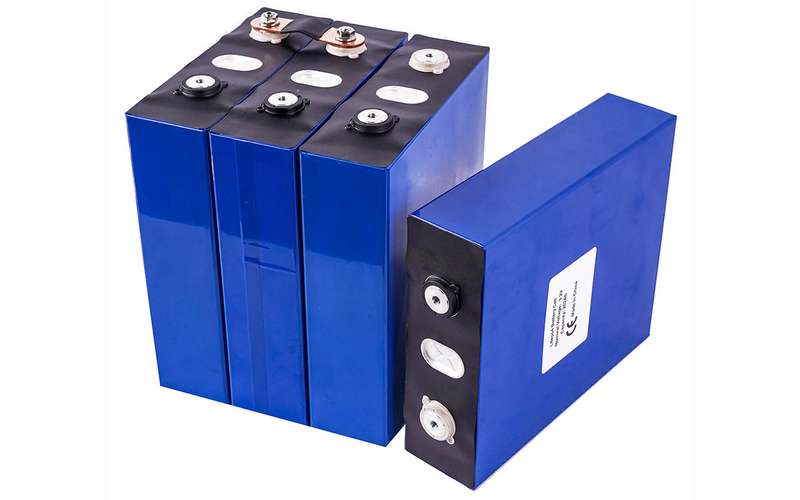 To “repack” the battery, you can use the original cells (including those from dismantling) or buy new ones from China. One cell costs from three to five thousand rubles.
Where to fix?
So far, Russia does not shine with a large assortment of special technical centers, but they do exist. Points with competent specialists can be found in Vladivostok, which is not surprising – electric vehicles and right-hand drive hybrids are a dime a dozen there. You can also repair in Irkutsk.
But in the European part it is still sad. A few offices that can bring electric transport back to life are concentrated in Moscow. Cars are brought to them from all over, including from Belarus and Kazakhstan. The lines stretch for months ahead. By the way, these guys can also repair electric scooters with electric bicycles.
 Repair for electric scooters is most often needed after “competent” improvements. For example, after self-assembly of such a battery pack. And then the owners are sincerely surprised why it does not go, but only stinks of burning or burning.
But the number of vehicles on electric traction is growing, which means that the network of electrical centers will also grow. Also because repair technologies are generally simpler than with ICE cars. The bulkhead of the electric motor with the replacement of bearings and the removal of the battery with an assessment of the performance of each of its elements separately – these are the most popular works. Compare with a major overhaul of an internal combustion engine or an automatic machine …
However, any increase in the popularity of “electric trains” is unlikely to affect the cost of their repair. The lion’s share of the repair cost falls on the battery. We don’t make our own cells. Until we do.
PAY MORE, GO FURTHER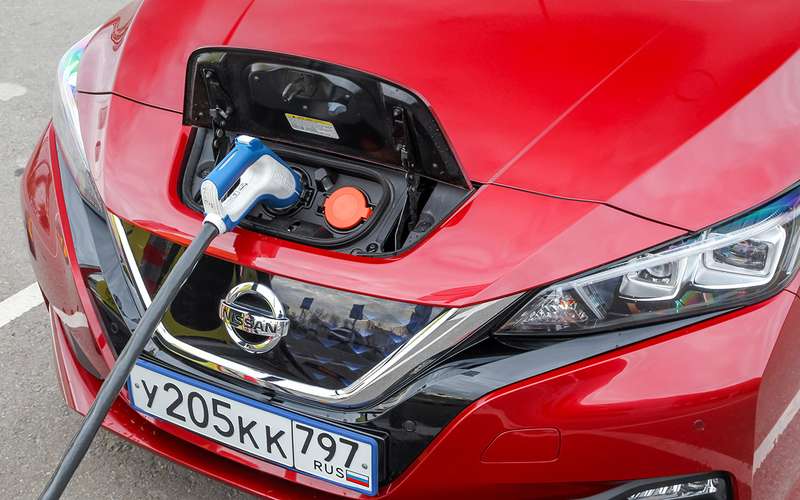
In addition to repairs, electric vehicles can also be finalized in specialized centers. First of all, this concerns the popular Nissan Leaf hatches, which have two main drawbacks – a small power reserve and the lack of a full-fledged battery cooling / heating system.
Installing a “webasta” battery will cost about 25-35 thousand rubles. The cost of an additional battery pack depends on the wallet and the volume of the trunk, where it is placed. The smallest energy cells for 12 kWh cost 220 thousand rubles. The cells in them, of course, are Chinese. Twice as large unit (27 kWh) will cost 420-440 thousand.
In addition to installation, a flashing of control units is necessary. An electric car must see and understand that an “extra tank” has appeared. This is necessary not only for the correct calculation of the power reserve, but also for successful charging. Depending on the capacity, the power reserve of the Leaf can be increased by 80–120 kilometers.
We thank Ne Gasoline for their help in preparing the material.
What a 10-year-old electric car with high mileage is capable of, find out here. “Behind the wheel” can be read in Telegram
Photo: Alexander Vinogradov and the Ne Gasoline company


