


Although released in 2013, the 1.2 Puretech Turbo engine still causes many concerns for owners and manufacturers of the former PSA group (Stellantis) whose warranty expenses are exploding. In January, we revealed to you that Citroën, DS and Peugeot recalled 220,000 models produced from March 2013 to April 2017. The cause of the premature wear of the engine oil which leads to the degradation of the timing belt. By disintegrating, the latter clogs the vacuum pump which explains the loss of efficiency of the braking system and the few accidents recorded. Consequently, the three brands were obliged to initiate a recall action, known as a safety action.
<<< All models affected by the recall >>>
Modification in 2017
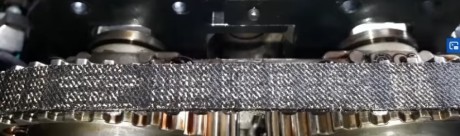
For lack of technical explanations from the manufacturers, we investigated and discovered that the timing belt was modified in April 2017. On that date, the canvas which constitutes the back of the belt was removed because, by disintegrating, residues clog the vacuum pump. However, the basic problem persists on the models produced afterwards. As proof, the technical notes concerning the new Peugeot 208 and others. Since January, manufacturers have implemented a support grid concerning the timing belt. They logically take 100% of the cost of parts and labor for vehicles less than 6 years old OR less than 100,000 km, whichever comes first.
How to preserve the belt?
The origin of this problem is linked to the rapid degradation of the oil, mainly on vehicles that run little (less than 15,000 km) and mostly in urban use. In this context of use, the 1.2 PureTech engine is subject to oil dilution, i.e. fine unburnt fuel droplets slide along the cylinder wall and mix in the crankcase. lower oil. Consequently, this mixture has an abrasive character for the belt which explains its wear. For lack of a technical solution to avoid it, the only way to preserve the belt is to drain the engine every year for small rollers. This is, moreover, the manufacturer’s new recommendation, such as checking the belt at each service.
To check before buying second-hand

If you are in the process of acquiring a second hand model equipped with this engine, be vigilant. All the more so if the former owner mainly makes urban routes. Depending on the age of the vehicle, check whether the timing has been replaced because, since December 2020, the manufacturer has changed the replacement frequency from 180,000 km or 10 years to 100,000 km or 6 years. Carefully peel the maintenance book and the invoices since in the event of non-compliance with the maintenance plan and the quality of the oil, the manufacturers will refuse any support. By the way, if you have your vehicle serviced outside the manufacturer’s networks, make sure that the professional checks the width of the belt, which is not a given. Before signing, an inspection of the condition of the distribution is strongly recommended to avoid any disappointments.
.


