


Archaeologists always rejoice when they manage to find the remains of dinosaurs, but the discovery of the remains of soft tissues that have somehow magically survived to this day is considered a real holiday.
Some time ago, specialists from the University of North Carolina managed to find structures that resembled blood vessels. They belonged to the 80 millionth hadrosaur. These ancient animals lived in North America during the Late Cretaceous in what is now the Woodbury Formation approximately 80-78 million years ago and were herbivores. And their incredible “duck” beak was 9 meters long. IFLScience talks about it.
Focus.Technology has its own Telegram channel. Subscribe to not miss the latest and most interesting news from the world of science!
Later, they published their own study, where the results showed that these structures are most likely relics of real blood vessels and worked as transport links for the dinosaur’s circulatory system, and not just a biofilm left by bacteria or other contaminants.
This was confirmed thanks to a detailed analysis of the existing sample. The scientists resorted to high-resolution mass spectroscopy and found several proteins, namely myosin, that normally make up the circulatory systems.
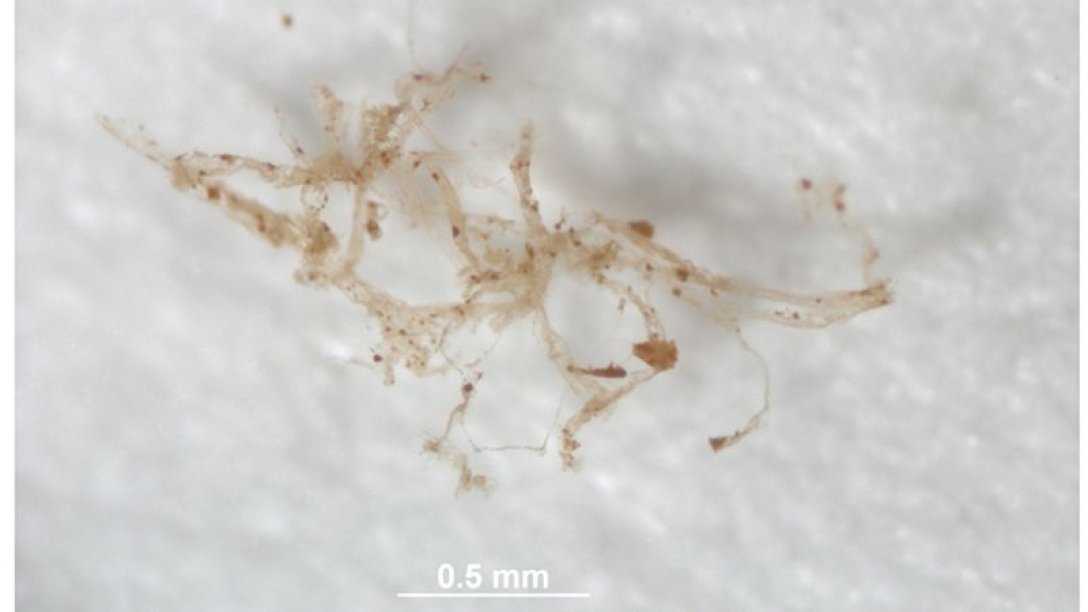

Blood vessels of an ancient dinosaur
[+–]
Photo: M. Schweitzer, NC State University
For a million years old, the blood vessels are remarkably well preserved. Transparent and slightly flexible to the touch, these structures still have the shape you would expect from animal veins.
This find is considered extraordinary not only because it preserved information about ancient animals that lived thousands and millions of years ago, but as proof of the ability of organic structures, such as blood vessels and cells, to survive for a long period unharmed.
Tim Cleland, study author and molecular paleontologist at the University of Texas at Austin, said: “This study is the first direct analysis of the blood vessels of an extinct organism. new avenues for studying the evolutionary relationships of extinct organisms, as well as revealing significant protein modifications and determining when they might have arisen in these organisms.”
Scientists managed to study not only the circulatory systems of dinosaurs, but also the surprisingly well-preserved skin of the ancient inhabitants of the planet. All these findings provide more information about the history of proteins over 80 million years, and how exactly they help animals adapt to the environment and changes in it.
Previously, Focus figured out why dinosaurs had claws. A new study sheds light on ancient predators.


