


Do manufacturers lack transparency about the real safety offered by automated driving technologies? It is possible, and this is why the NHTSA (National Highway Traffic Safety Administration), the body which manages road safety in the United States, now requires them to report any serious accident to the authorities within 24 hours. the occurrence of it.
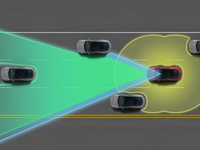
This concerns cases of death involving at least one vehicle equipped with a level 2 automated driving system, i.e. the second level of assistance available, with cruise control and lane keeping, but which still requires constant monitoring of the driver.
This also concerns cases where a person has been hospitalized, where a vehicle has had to be towed, where an airbag has been triggered and finally any case involving a cyclist or a pedestrian. In addition, the information must be updated within a period of ten days after the accident. Very heavy fines are foreseen for failure to comply with these rules, which is not surprising.
« The main mission of NHTSA is safety. By making accident reporting mandatory, the agency will have access to critical data that will quickly identify safety issues that could arise in these automated systems. Commented Dr. Steven Cliff, administrator of the NHTSA. ” Collecting the data will help build public confidence that the federal government is closely monitoring the safety of automated vehicles. »
This new regulation currently targets a dozen companies, including General Motors, Waymo, a subsidiary of Alphabet (therefore Google), and of course Tesla. The latter is in the sights of the American authorities following controversies over accidents involving some of its cars whose driving aids could have been activated.
In June, the NHTSA announced that it had opened 30 investigations into Tesla’s accidents since 2016, which have resulted in 10 deaths. The company is also criticized for the fact that it maintains a certain vagueness on the level of actual assistance of its cars, making what it presents as a “sparkle” fully autonomous driving capability », Which is not (or not yet) completely the case.
In short, if the collection of data should be used by manufacturers and equipment manufacturers to develop their products, it also appears to be an essential element for safety, which must therefore be shared.


